Cup of Excellence Indonesia 2026: Public Cupping at HomageMakes Bandung
Baca dalam Bahasa Indonesia di sini.
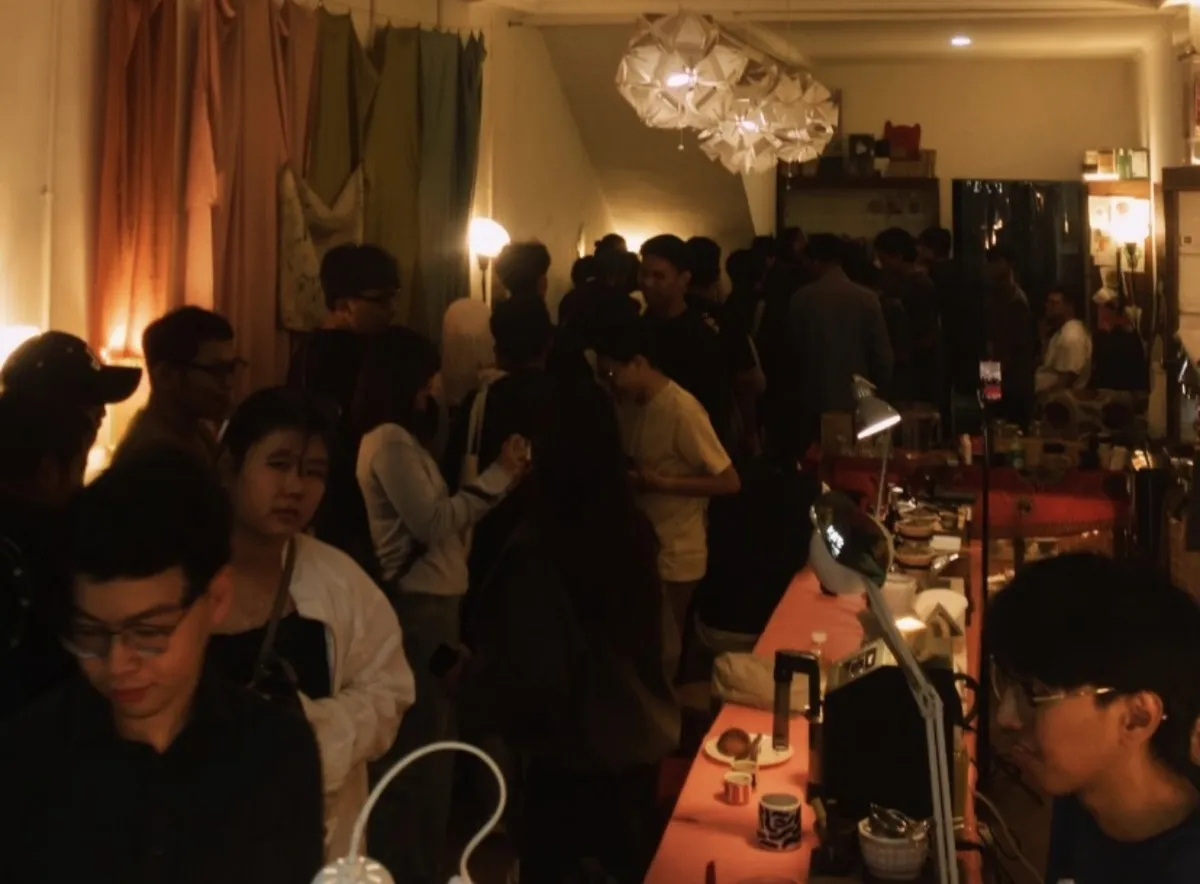
On Saturday, 31 October 2026, we hosted a free public cupping at HomageMakes in Bandung, featuring the 10 coffees selected for the top 10 cupping session of the international round of Cup of Excellence Indonesia 2026. These were the coffees roasted and cupped by the international jury during International Round 2. Anyone could come by, sit at the table, and taste some of the best coffees grown in Indonesia this year, side by side. And so many people did! It was crazy to have that many people in the small space on our first floor, and if you were one of them, THANK YOU SO MUCH! Our sincerest apologies for any shortcomings and for our very limited space.
The coffee from these lots will soon be sold at an international online auction, often at prices that put them out of reach for local roasters, cafés, and even the farmers who grew them. For one afternoon, we wanted to keep them a little closer to home. After the cupping, we held a quick sharing session with Andi Widjaja, this year's Cup of Excellence country coordinator for Indonesia, who walked us through how the program actually works.
What is Cup of Excellence?
Cup of Excellence (COE) is a green coffee competition and auction run by the Alliance for Coffee Excellence (ACE), a nonprofit headquartered in the United States. It began in Brazil in 1999, and each participating country holds its own competition, where farmers submit their best lots to be cupped blind by panels of judges. The farmer's name stays hidden until the awards, so a smallholder's lot sits alongside everyone else's and is judged purely on what's in the cup.
According to ACE's Indonesia 2026 page, every competition runs six rounds of blind cupping across two stages:
- A national jury of Indonesian cuppers tastes every entry in round one, then narrows the field to the top 150, the top 90, and finally the top 40 lots, with each lot needing at least 86 points to advance to the next stage.
- An international jury of 16 to 24 professional cuppers from around the world travels to the host country to score those 40 lots.
- Coffees scoring 87 or higher earn the Cup of Excellence title, and the top 10 are cupped one final time to settle their ranking. Anything at 90 or above receives the Presidential Award.
By the end, each winning lot has been cupped at least five times. The winners are then sold through an online auction open to registered buyers worldwide, and every final price is published. ACE describes this as a way of setting a standard for price transparency and premiums paid to farmers.
Cup of Excellence Indonesia: a short history
Indonesia was the first country in Asia to hold a full Cup of Excellence. After a 2019 pilot in Takengon, Aceh, run with the Specialty Coffee Association of Indonesia (SCAI) and the local government of Aceh Tengah, the first national competition took place in 2021. Twenty-six lots from across the archipelago scored 87 or more.
That first auction drew buyers from around the world, who spent more than US$360,000 (about Rp6.5 billion) in total. The 26 winning lots sold for an average of nearly US$30 per pound (about US$66 per kg, or roughly Rp540,000 per pound and Rp1.2 million per kg). The top lot, a honey-processed coffee from Aceh, went for US$80 per pound (about US$176 per kg, or roughly Rp1.44 million per pound and Rp3.2 million per kg) to a Japanese roaster. Rupiah figures in this post use today's rate of about Rp18,000 per US dollar. Organizers also singled out one domestic buyer that year, Kopikina, which bought a washed Typica from West Java.
Indonesia held COE again in 2022 and 2023, and 2026 marks its return after a break, according to ACE's results archive.
What it takes to run COE in Indonesia
COE is a licensed program. ACE owns the competition, and in Indonesia the license is held by AKSI, the Asosiasi Kopi Spesialti Indonesia (Specialty Coffee Association of Indonesia, or SCAI). AKSI pays a licensing fee every year for the right to host it here, then takes on the cost of running the program on the ground. At our sharing session, Andi shared that the total cost of running the program is pegged at around US$250,000 (about Rp4.5 billion) a year. The budget and overall expenditure for this year's COE Indonesia programme was within that range. This amount covers costs related to the international jury, venue rental, a warehouse to receive and store every lot, and more.
ACE's own page notes that part of each auction's proceeds goes back to the in-country host as an "organizing country commission" to help cover these operating costs. In Indonesia, this programme is still about 80% privately funded, with very limited (almost nonexistent) government support. Keeping it going therefore depends heavily on the goodwill and sponsorship of people who want Indonesian coffee to be seen.
COE Indonesia 2026 by the numbers
According to figures shared by @cupofexcellence.indonesia and AKSI SCAI, this year's competition received 119 lots from 10 provinces, totalling 54,758 pounds (roughly 24,800 kg) of green coffee. That's an average of about 460 pounds, or just over 200 kg, per lot.
| Province | Lots | Share of entries |
|---|---|---|
| West Java | 42 | 35% |
| Aceh | 33 | 28% |
| East Java | 11 | 9% |
| Jambi | 8 | 7% |
| South Sulawesi | 8 | 7% |
| Bali | 6 | 5% |
| Central Java | 5 | 4% |
| North Sumatra | 3 | 3% |
| South Sumatra | 2 | 2% |
| West Sumatra | 1 | 1% |
A few things stood out to us when we looked at the numbers:
- Two provinces made up most of the field. West Java and Aceh together sent 75 of the 119 lots, or about 63%. Java as a whole sent 58 lots and Sumatra 47.
- Results largely followed participation. Those same two provinces account for nine of the final top 10: five from West Java and four from Aceh, with Bali completing the list. Pangalengan, in the hills south of Bandung, managed to place three lots in the top 10 on its own.
- About one in five entries won. Twenty-four of the 119 lots earned the Cup of Excellence title, roughly 20%. By province, Bali had the highest success rate, with three of its six lots (50%) winning, followed by West Java (11 of 42, or 26%) and Aceh (8 of 33, or 24%). Central Java and Jambi each placed one lot, while entries from East Java, South Sulawesi, and the three smaller Sumatran provinces didn't make the final list this year.
- Processing has changed quite a bit. Experimental processing made up 52.1% of entries, followed by natural (19.3%), washed dry-hulled (10.9%), honey (10.1%), and washed wet-hulled (7.6%). Experimental lots also took half of the top 10, including first place.
- Wet hull still has a place. Giling basah, the traditional Sumatran process, was the least common category, yet a wet-hulled coffee from Aceh Tengah finished second overall with a Presidential Award score of 90.10.
- A wide range of varieties. Organizers counted more than 23 cultivars. The most common were Ateng (19.1%), S-795 (11.5%), Typica (10.5%), Timor Hybrid (9.2%), and Sigararutang (8.9%), alongside smaller shares of Andungsari, Bourbon, Catimor, Kartika, Caturra, P88, USDA 762, Komasti, Cobra, Java, Sidra, Catuai, Borbor, and Jember.
The public cupping at HomageMakes
The International Jury week for COE Indonesia 2026 ran from 19 to 23 October, with the awards ceremony on 22 October. A week later, we brought the 10 coffees selected for the international round's top 10 cupping session to our cupping table at Jalan Kartini 5A. These were the same coffees roasted and cupped by the international jury during International Round 2. The event was open to everyone and completely free. It took the place of our usual monthly free public cupping, and we estimate that 40 to 50 people filled the room, including coffee lovers, one of the local jury members, and a few producers.
The energy in the room was remarkable. In many ways, it felt like a reunion. The Indonesian coffee industry is a small one, and there were so many familiar faces in the room. It was definitely a challenge navigating the crowded space and our tiny, tiny tables, but we were fortunate that everyone came in the spirit of sharing, fellowship, and community. We're incredibly grateful for how gracious our guests were throughout the afternoon.
We cupped the top 10 alongside two of our house coffees from Publish Coffee Roasters, partly to provide some context for what an “average” or everyday Indonesian coffee might taste like next to the best of the best. Of the top 10, three were washed or honey processed, one was giling basah (wet hulled), and six were naturals. We tasted the washed coffees and gilbas in the first flight, followed by the six naturals. They were not cupped in ranked order. Instead, all the coffees were coded, and their rankings were only revealed at the very end, just before guests went home.
As for the coffee: yes, there was a noticeable jump in quality and intensity from our benchmark coffees to the Cup of Excellence lots, but not so much that the gap felt impossible to bridge. If anything, it left us wondering how soon we might be able to produce something even better.
The 2026 top 10
The official results are now public on ACE's Indonesia 2026 page. Twenty-four lots earned the Cup of Excellence title this year, and the top two scored above 90 points, which earns the Presidential Award. West Java, and the Bandung highlands in particular, had a remarkable year. The coffees we tasted at our event were the lots selected for the top 10 cupping session of the international round, using the coffees roasted and cupped by the international jury during International Round 2. The final ranking was settled afterwards, so the order below may differ slightly from what we tasted.
| Rank | Score | Farmer | Region | Process |
|---|---|---|---|---|
| 1 | 90.25 | Edward Ken Tirtadarma (Ating Hermawan) | Sindangkerta, Bandung Barat | Experimental washed/honey |
| 2 | 90.10 | Iwannitosa Putra | Bebesen, Aceh Tengah | Wet hull |
| 3 | 89.70 | Haditya Pamungkas | Pangalengan, Bandung | Experimental natural |
| 4 | 89.70 | Diki Wahyudin | Pangalengan, Bandung | Experimental natural |
| 5 | 89.65 | Iriyani (Bukit Sama Farm) | Kebayakan, Aceh Tengah | Washed/honey |
| 6 | 89.20 | Eka Teguh Kurniawan (Finca Don Obar) | Cisurupan, Garut | Experimental natural |
| 7 | 89.15 | Mustakim | Pegasing, Aceh Tengah | Natural |
| 8 | 89.00 | Rynaldho Maulana Rizqi | Pangalengan, Bandung | Experimental natural |
| 9 | 88.70 | Ririn Marlisa | Kebayakan, Aceh Tengah | Natural |
| 10 | 87.85 | Kevin Jonathan | Kintamani, Bangli | Natural |
Congratulations to every producer on the list, and to everyone who entered. Getting a lot onto that table in the first place takes years of care that plenty don't see.
How much do winning farmers stand to earn?
The official registration form for COE Indonesia 2026, shared by AKSI SCAI, sets out how lots are entered and how auction money reaches farmers:
- Lot size: 180 to 600 kg of export-ready green coffee, from one farm or a collective lot of up to three farms in the same kecamatan, and from a single post-harvest process.
- Entry fee: each producer's first lot is free. A second lot, from a different farm or process, costs Rp3,500,000 (about US$195). Cooperatives and farmer groups can enter up to three lots, the first free and the other two at Rp3,500,000 each.
- Coffee used along the way: about 10 kg of each lot goes to judging and about 20 kg to samples for potential buyers, so roughly 30 kg of a lot isn't sold.
- Commission: AKSI takes a commission from the auction result to help run the program. The tiers are 15% for prices of US$5.50–6.50 per pound, 20% for US$6.50–10.50, and 25% above US$10.50. Andi also mentioned that not every host country takes this commission, and in some countries the organizers have chosen not to, even though they were entitled to.
- Export costs: farmers cover export paperwork such as phytosanitary certificates, certificates of origin, FDA registration, and isoprocarb testing, plus lot packaging and sample shipping.
- Payment: auction proceeds are paid through an appointed exporter, into a bank account in the registered producer's own name.
To give a rough sense of scale, here's a simple illustration for a 300 kg lot, with about 270 kg (roughly 595 lb) left to sell after judging and samples, and the matching commission tier applied:
| Auction price | Gross sale | After commission | In rupiah |
|---|---|---|---|
| US$10 per lb | US$5,950 | US$4,760 (20%) | about Rp85.7 million |
| US$30 per lb (2021 average) | US$17,860 | US$13,390 (25%) | about Rp241 million |
| US$80 per lb (2021 top lot) | US$47,620 | US$35,710 (25%) | about Rp643 million |
At US$30 per pound, that works out to about US$50 per kg of green coffee (roughly Rp893,000 per kg) before export costs. These numbers are only an illustration, of course. Real results depend on the final lot size, the auction price on the day, and the export costs, and the detailed commission simulation is in the official participant guide.
A sharing session with the country coordinator
After the cupping, we squeezed everyone into a small, crowded, and very warm room for a sharing session with Andi Widjaja, the country coordinator for COE Indonesia 2026. He introduced the program to everyone, shared what it costs to bring it to Indonesia, and answered questions from the floor.
After the event, Andi kindly answered a few more of our questions by message. His answers below have been translated from Indonesian and lightly condensed.
How does COE Indonesia reach farmers?
Before this year's competition, the team held socialization sessions in Bandung, Garut, Temanggung, Malang, Kerinci, Samosir, and Gayo. They explained how to take part in COE 2026, went through the rules and regulations and the COE guidebook in detail, including how to register and how many lots could be entered, and walked producers through the numbers involved.
Do farmers get feedback on the coffee they submit?
Yes. Score sheets are shared with participants, especially those whose lots were eliminated, so they can see how their coffee was assessed and what they could work on.
What advice does Andi have for farmers entering next year?
Start preparing at the farm. Coffee that's already good when it leaves the farm, even with simple processing, can say a lot in the cup. He also encourages producers to study the COE cupping form and understand that judges are looking for a cup that's clean and sweet, two qualities that come from good raw material.
What is the value of a competition like COE?
For producers, it's a chance to learn good agricultural practices (GAP) and widen their connections and opportunities. For the industry, a healthy upstream means better quality further down the chain. Consumers also become better informed along the way.
Does the Indonesian government support COE Indonesia?
Very little, according to Andi. Bank Indonesia has supported the program, but only as a short-term sponsor, and that support doesn't cover the license. Sponsorship in the form of fresh money was also limited this year, and he estimates the program is still around 80% privately funded.
Will there be more public COE cuppings in Indonesia?
More are being planned, though details can't be shared just yet. Andi also explained why these sessions are limited. The green coffee stored in the warehouse still belongs to the participating farmers, so the team tries not to take too much of it for cuppings and makes the most of coffee that's already been roasted. Their priority for now is keeping as much of each lot as possible for the auction. Each lot is roasted for judging in 700-gram (about 1.5-pound) batches, and while quite a lot of roasted coffee is left over after the jury rounds, not all of it is still in good enough condition for cupping. He also mentioned upcoming cupping sessions that producers may be able to join. The best way to stay updated is to follow @cupofexcellence.indonesia on Instagram.
How can local cafés and roasters help?
His answer was simple: buy the coffees, or bid on them at the auction.
We're very grateful to Andi for his time, both on the day and afterwards, and to everyone who stayed to listen and ask questions.
What a COE ranking can and can't tell us
We love celebrating these coffees, but we also want to be honest about what the list represents. The COE winners are the best of the coffees that were entered this year. Plenty of wonderful Indonesian coffee never makes it to the competition table, for reasons that have little to do with quality.
Some of those reasons come from the rules themselves:
- Arabica only. Indonesia grows a great deal of robusta and some liberica, and neither can enter.
- A minimum of 180 kg. A lot must be at least 180 kg of export-ready green coffee from a single process, from one farm or up to three farms in the same kecamatan. For a smallholder working a small plot, setting aside that much coffee of one consistent quality can be out of reach.
- Strict physical standards. Lots need 10–12% moisture, water activity of 0.65 aw or lower, no primary defects, and no more than five secondary defects in a 350 g sample. Meeting those standards takes good drying and sorting, which not every farm has access to.
- Paperwork. Producers need an ID card, a bank account in their own name, proof of land ownership or management rights, and farm coordinates. For farms on customary/indigenous land, a letter of confirmation from the nearest local government official, such as the village head, can be used instead of formal land documents.
- Cost and risk. About 30 kg of each lot goes to judging and samples, shipping to the warehouse in Bandung is at the producer's own risk, and export costs are theirs to cover. An eliminated lot can be collected or sent back at the producer's expense.
- One window. Lots had to arrive between 10 August and 22 September, while harvest calendars vary widely across the archipelago. Plenty of farms simply weren't ready or had delayed harvests due to severe climate change.
Other reasons are simply part of life. Many producers already have loyal buyers and don't need an auction. Some may not have heard about the competition. And a score is a snapshot of one harvest, cupped by one jury under one set of protocols that rewards clean, sweet cups. This year, for example, there were no entries from well-known regions such as Flores or Papua.
So we see the COE list as a wonderful window into Indonesian coffee, but only one window among many. We hope to keep tasting and sharing the great coffees that never enter a competition at all.
Why we hosted this cupping session
COE coffees are some of the finest Indonesia produces, and most of them leave the country soon after the auction. Prices for winning lots typically land somewhere in the tens of dollars per pound (several hundred thousand rupiah or more per pound), and the 2021 Indonesian champion sold for US$80 per pound (about US$176 or Rp3.2 million per kg). At those prices, many of the farmers who grew these coffees may never get to taste their own lot after it's been roasted and brewed with care, while small local roasters and cafés rarely get the chance to buy them.
We wanted to bring a little of that coffee back to the people closest to it, for free, and to keep pushing for Indonesian coffee to be enjoyed at home as much as it is abroad. That's a big part of why HomageMakes exists: to make good coffee feel welcoming and within reach.
We also hoped the producers in the room would find something useful in it. Anyone who makes things knows the feeling of tasting something wonderful and thinking, I could make something like this, or maybe even something better. As bakers, baristas, and roasters, we feel it all the time. Think of this as a benchmarking session of sorts.
What's next for COE Indonesia 2026
The Cup of Excellence auction for Indonesia 2026 opens on 1 December 2026 at 13:00 UTC (20:00 WIB). Bidding requires registering with ACE, either for the auction alone (US$250, about Rp4.5 million) or with a 150-gram sample of every winning lot (US$850, about Rp15.3 million). ACE members pay less. For updates on future cuppings, follow @cupofexcellence.indonesia on Instagram.
If you're a local roaster or café thinking about bidding, or simply curious, come by HomageMakes and say hello. We'd love to talk coffee, compare notes, and hear what you tasted. And to the producers who joined us, thank you for coming!
HomageMakes is a specialty coffee bar and bakery at Jalan Kartini 5A, Bandung. Follow us on Instagram for future cuppings and events.